Article
Bold Steps & Big Swings
Bold steps & Big Swings
By Steven W. Alloway
A Note from the Editor
Artists often take their biggest creative swings when they have support, accountability, and encouragement from others.
At Epiphany Space, we help artists, writers, filmmakers, musicians, and creative entrepreneurs pursue ambitious creative goals together.
Babe Ruth hit 714 career home runs, a record that stood for nearly 40 years. Over that same period, the Babe also struck out 1,330 times—another MLB record, which stood for nearly as long. Whenever he would swing at a pitch, he would swing hard and give it his all. It would either be an epic triumph or an epic failure.
The fact is, you can’t have one without the other. You can’t have the triumphs without the failures, or the home runs without the strikeouts. That’s true of baseball, and it’s also true of life. You don’t get anywhere by playing it safe. In order to be successful in this world, you must be like a thief of oversized playground equipment: you need to take big swings.
So… How do you do that? How do you take those big chances in your life and in your art, and what will they lead to if you do? Here are a few questions to ask yourself if you want to start along the path of creative boldness that ultimately leads both to failure and success.
What Is the Biggest Swing You Could Take Right Now in Your Creative Life?
Take a couple of minutes and think about this. Do it right now. What does “taking big swings” mean in your creative field? What does it mean for you right now, in your current situation? What would constitute taking a big swing for you?
Maybe it’s a big project that you want to take on. Maybe it’s a
collaboration with someone you admire. Maybe it’s an application for something: a grant, a fellowship, a program that would provide new opportunities, or a course that would help you take your art to the next level. Maybe it’s uprooting your life and moving somewhere else that has more opportunities for what you want to accomplish. It could be anything at all… As long as it’s big.
Of course, “big” is relative. So the next thing to ask is, what makes this such a big swing for you? What would going for this thing mean for you, for your art, or for your career? And what would you be risking if you went for it? There’s always risk involved. If it’s not a big risk, then it’s not a big swing. So what do you stand to lose by doing this?
The risk could be something concrete, like, “I’m putting a lot of money into this, and if it doesn’t pan out, I’ll lose it.” It could be something more personal, like, “If I submit my work to this organization now, and they turn me down, then I’ll lose any hope of working with them in the future.” Or it could be something as simple as, “If I put myself out there in front of all of these people, and I fail, then I’ll look really stupid and inept, and it will be embarrassing for me.” Which is absolutely a valid concern.
Now that you understand what you’re going for and what you’re risking… Is it worth it to you? Does the potential reward outweigh the potential loss? Is taking that big swing worth the possibility that you might strike out? And if it’s not… Why not? What WOULD be worth the risk? How far outside your comfort zone are you willing to step, and what will happen when you do? Once you have your answer… That’s your big swing.
What’s Stopping You?
Often, when people ask this question, they mean it almost rhetorically. “You want to do that project? Well, what’s stopping you?” I.e., nothing is stopping you, so why not just go do it instead of standing around talking about it?
In the real world, though, there might actually be something stopping you. Lack of time, lack of money, lack of help, are all real problems that can stand in the way of your taking the swings that you want to.
This is different from the risks that we talked about earlier. The risks don’t actually prevent you from taking the swing. They just make it daunting. If they turn out to be too daunting, then YOU prevent yourself from taking the swing. It doesn’t make the swing any less possible—just a lot scarier.
But in addition to the risks, there may be actual obstacles standing in your way. For instance, say your big swing is bringing your work to some major festival, like Hollywood Fringe or Edinburgh Fringe. To do that takes money. Even if it’s just you, alone on an empty stage, there are registration fees, venue rental, advertising, and more. It adds up. For the sake of our example, let’s say your particular project will cost $5,000 to mount at the festival of your choice.
If you don’t have $5,000, that’s an obstacle. You can’t cover the costs, so you can’t go to the festival. If you do have, or can access, that amount of money, but it would be a difficult proposition, and there are a hundred different reasons why you shouldn’t… That’s a risk. You might lose everything, but you can do it. And that’s why they call it a big swing.
It can be a fine line between obstacle and risk, though. Sometimes, the thing that’s standing in your way, keeping you from taking that big swing, is just an excuse, because you’re not ready for the risk. On the other hand, sometimes you can go rushing into some new venture, only to find that you were vastly unprepared and didn’t have what you needed after all.
So how do you know where that line is? I’m not really sure. It’s a question I still struggle with myself. I’ve been known to do both. I’ll spend months, even years, making excuses for why a particular project can’t move forward yet. Then I’ll take another project and launch into it with everything I’ve got, only to find that “everything I’ve got” isn’t nearly enough to move the project forward.
People generally say, “If you’re not sure, better to err on the side of caution.” But in this case, I say err on the side of recklessness. Err with gusto. Even if you can’t do it, do it anyway. See how far you get before you fail—and then do it again and see if you can get just a little bit further. That’s what big swings are all about. If you take the swing, and it turns out that you couldn’t do it… At least you tried. But if you decide not to take the swing… Well, I say, it’s better to fail at doing something than to succeed at doing nothing. And Babe Ruth says that leading the league in strikeouts is a small price to pay for leading the league in home runs.
Looking for a supportive artist community where
creatives encourage one another to take bold next steps?
What Will You Do About It?
You know where you want to go. You know what’s standing in your way. Now, how will you get there? It’s not just about launching yourself into potential failure. You don’t have to take the swing all at once. If you take the time to figure out what you need and how you can get it, you’ll have a better chance at success.
If it’s money, hold a fundraiser. Or just ask for donations. Tell people what your big, impossible goal is, and ask them to help you get there. In 2019, my theater group, Spirit OnStage, went to Kazakhstan to perform children’s theater. We spent months doing shows, bake sales, and a host of other events to cover our expenses. But also, there were a number of people who, when I told them, “We’re raising funds to go to Kazakhstan!” just handed me some money, on the spot—sometimes without my even asking. People are rooting for you. They’ll help you if you let them.
Maybe money isn’t the issue. Particularly if it’s a big project that you’re working on, you’re likely to need to get other people on board. Maybe you need someone with a specific skillset, and you’re not sure where to find someone who meets the criteria.
Start by asking around. Does anyone know anyone? Does anyone know anyone who knows anyone? The more you
connect with those around you, the more opportunities you’ll have of finding the people and resources that you need.
Or maybe the issue is just time. Finding the time you need for your passion projects amid work, family, and other responsibilities can be difficult, at times almost impossible. But if you can figure out how much time you have and how much time you need, then with a bit of help and a bit of patience, there are usually arrangements that can be made to make the two fit together.
Whatever obstacles are in your way, the key is in how you approach them. If you treat them as barriers, then your entire project becomes impossible. But if you treat them like problems to be solved, then eventually, you can find a way around, over, or through. And with time and effort, you’ll find yourself poised and ready to take your big swing.
What Are You Afraid Of?
Being courageous doesn’t mean you’re not afraid. It’s been said that anyone who isn’t afraid is either a fool or a madman. I would argue that there’s a third option. If you’re not afraid to take the swing, then you’re not taking a big enough swing. You’re not stepping far enough outside your comfort zone. Which means you’re not really risking anything, and you’re not really growing. In which case, how do you ever expect to succeed?
Instead, pinpoint the things that scare you, the things that hold you back, and work on them. Understand them. Know what it is that you’re afraid of and why. Is it a general fear of failure? A fear of losing the money or other resources you invest? A fear of wasting your time on something that falls flat? A fear of looking foolish in front of others?
Understanding what it is, specifically, that you’re afraid of, makes it easier to face. And then, finally, you’re free to take those big swings. To strike out as many times as you need to, to get those home runs. If you can do that, then there will be no stopping you.
Ready to Stop Waiting Until You Feel Ready?
Join a community of artists, writers, filmmakers, musicians, and creative entrepreneurs who are building
momentum together through accountability, mentorship, and meaningful connection.
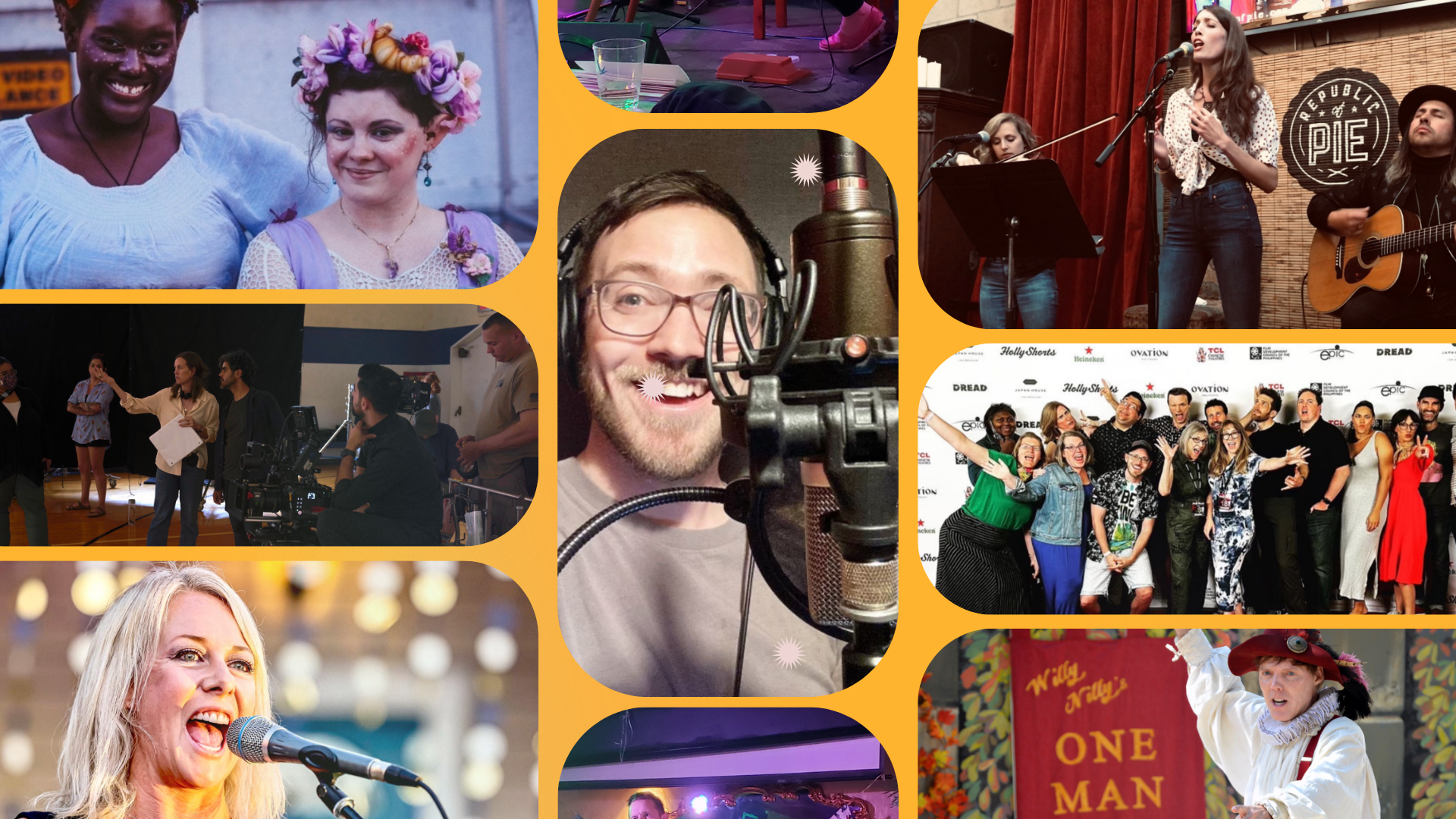
Steve Alloway - Writer & Interviewer Extraordinaire
Steve is a writer, performer, and occasional time traveler, born and raised in L.A. When he's not hanging out with awesome Epiphany Space people,
he can usually be found doing shows with his theatre group, Spirit Onstage, or baking delicious desserts.
His work explores creativity, storytelling, artistic growth, and the challenges of pursuing meaningful creative work.
share this
Related Articles
Related Articles