Article
The Walk is Part of the Work
the walk is part of the work
by Melissa Gibson Smith
A Note from the Editor
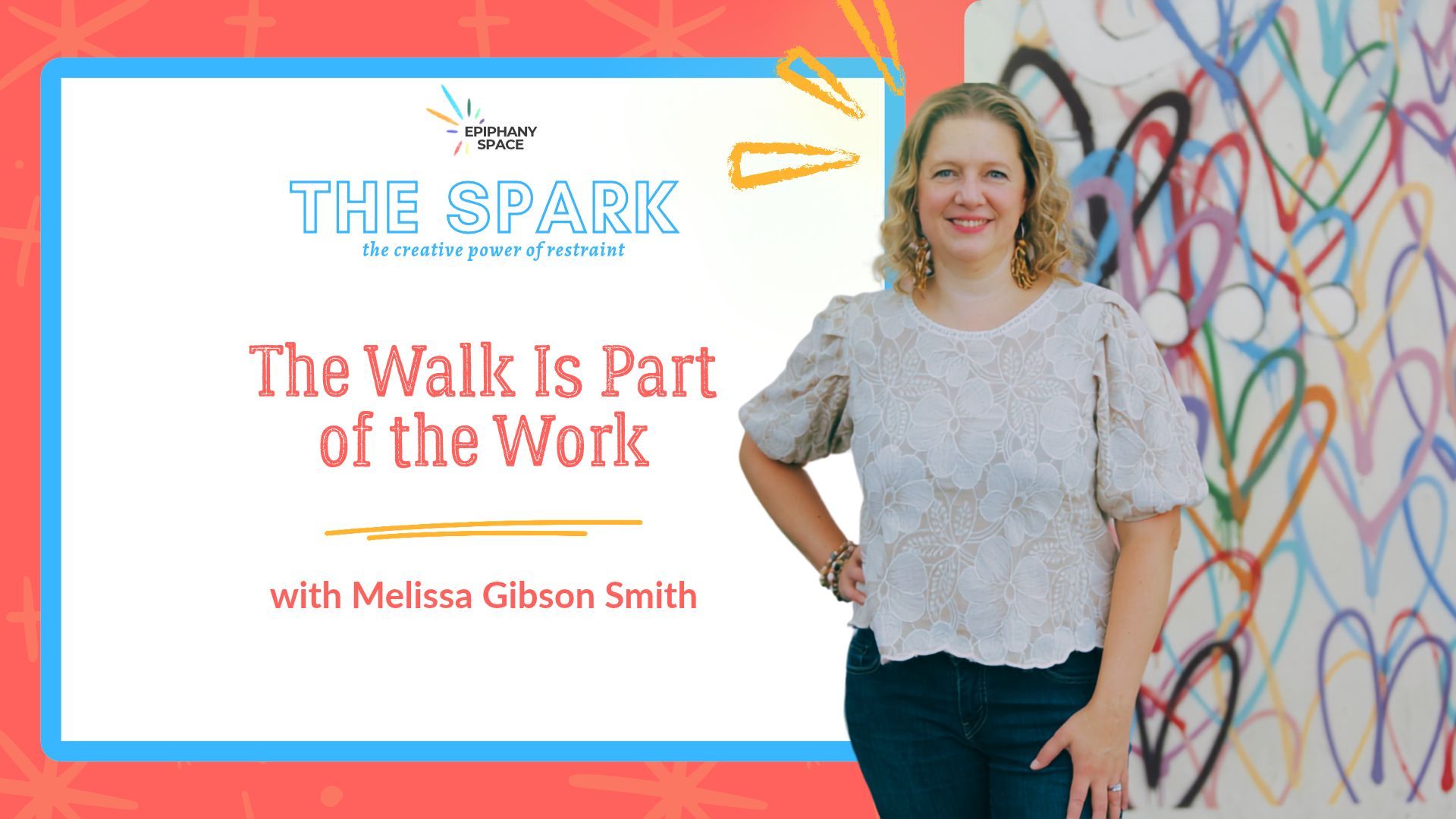
This week in The Spark, Melissa Gibson Smith looks at the work that happens when we step away from the work.
The walk without a destination. The afternoon without a deadline. The ideas that show up when we're doing something else entirely.
We spend so much time measuring what we've accomplished that we forget to account for what happens in between. But creativity needs room to breathe. Sometimes the next thing we make begins with giving ourselves permission to stop.
Mary Oliver won the Pulitzer Prize for poetry in 1984 and the National Book Award in 1992, and for most of her adult life she lived in Provincetown, at the far tip of Cape Cod. Many of her poems began on foot, in the woods, at the edges of ponds, and along the shoreline she walked for decades.
In a 1992 interview, she explained it simply: "I take walks. Walks work for me." She was careful to say what kind of walk she meant. "This is not a walk to arrive; this is a walk that's part of a process." She kept a notebook with her at all times, because, as she put it, "the angel doesn't sit on your shoulder unless the pencil's in your hand."
Most of us were taught that rest is what we're allowed once the work is done, and since the work is never quite done, rest keeps getting pushed to a later season. When we do stop, it often comes with guilt attached, as if we've stolen time from something more important.
As the year winds down and calendars fill with deadlines, travel, and holiday obligations, rest is usually the first thing we give away, and our creative work is usually the next.
Farmers have long understood something artists tend to forget. A field that is planted season after season without a break loses what made it fertile. Leaving it fallow for a season isn't neglect; it's how the soil recovers what the next harvest will need.
You don't have to earn the right to take a break. Rest isn't what happens after the practice. It's part of the practice, the place where noticing happens, where ideas loosen and recombine, and where the next piece of work begins forming before you ever sit down to make it.
That doesn't mean every walk turns into a poem. Oliver's point was that the walk belonged to the work whether or not it produced anything that day.
Rest looks different in every practice. For a painter it might be an afternoon spent watching late light move across a studio wall, for a musician a week without performing, and for a writer a morning walk with the notebook staying closed in a pocket. For professional artists, rest can feel like lost income, and for newer artists it can feel like losing momentum they worked hard to build. In both cases, the fear is that stopping will cost more than it gives, when the opposite is usually true.
Julia Cameron, author of The Artist's Way, noticed that ideas often surface during ordinary, rhythmic tasks like driving, showering, or washing the dishes, when the busy part of the mind finally lets go. Rest doesn't have to mean a retreat. Sometimes it's a sink full of warm water and a few minutes with nothing to solve.
At Epiphany Space, we try to care about the whole artist and not only what they produce. Some of the most important conversations in this community happen when someone admits they're exhausted, and the people around them respond with permission instead of advice. Sometimes the most generous thing another artist can say is, "Take the week. The work will still be here when you come back."
Reflection: What kind of rest does your creative life need right now?
Continue Your Creative Journey
Your creative ecosystem grows through collaboration, connection, and the people who help you bring your biggest ideas to life.
If you're looking for an online artist community where writers, filmmakers, musicians, visual artists, and creative entrepreneurs encourage one another and stay accountable to their goals, we'd love to welcome you to Epiphany Space.
Inside our creative community membership, you'll find:
- Weekly coworking sessions
- Peer mentorship groups
- Creative workshops & retreats
- A supportive community that helps you keep creating
MELISSA GIBSON SMITH: Founder & Creative Coach
Melissa Gibson Smith is a dedicated and passionate coach committed to helping artist’s and creative entrepreneurs thrive’ emotionally, physically, and spiritually. Melissa’s approach is trauma-informed and holistic, providing one-on-one spiritual and creative coaching sessions to help individuals overcome blocks that impact their lives and creativity. She conducts workshops, and the signature “Healing the Soul of the Artist” Masterclass, aiming to foster personal and professional growth. She has launched multiple businesses and a non-profit in California, New York, and Georgia as a culinary and hospitality executive.
As a healer and spiritual coach for over 15 years, Melissa understands the impact that the highs and lows of life have on our creative journey. These experiences enable her to bring a unique perspective to her coaching practice. Melissa’s goal is to create a safe nurturing environment that fosters love, belonging, play, and creativity; ultimately helping individuals achieve their full potential.
RELATED ARTICLES:
FREQUENTLY ASKED QUESTIONS
WHY IS REST IMPORTANT FOR ARTISTS AND CREATIVE PROFESSIONALS?
Rest gives artists time to step away from production, notice new ideas, and return to their creative work with a fresh perspective. It is an important part of maintaining a sustainable creative practice.
HOW CAN ARTISTS AND CREATIVES MAKE TIME FOR REST WITHOUT LOSING CREATIVE MOMENTUM?
Artists can build rest into their creative routines by scheduling breaks, taking walks, stepping away from unfinished projects, and allowing time for activities that don't have a specific outcome. Rest can be part of the creative process rather than a reward for finishing a project.
HOW CAN ARTISTS AND CREATIVES PROTECT THEIR CREATIVITY FROM BURNOUT?
Artists can protect their creativity by setting boundaries, making intentional commitments, allowing time for meaningful work, and recognizing when obligations are taking more than they give. Support from other creatives can also help artists make decisions with greater perspective.
WHY DO INDEPENDENT ARTISTS AND CREATIVES NEED COMMUNITY?
Creative work can be isolating, particularly for independent artists, writers, filmmakers, and musicians. A supportive artist community provides opportunities for networking, collaboration, accountability, mentorship, and honest conversations with people who understand the creative process.
WHERE CAN ARTISTS AND CREATIVES FIND COMMUNITY, ACCOUNTABILITY, AND MENTORSHIP?
Epiphany Space offers an online creative community for artists and creative entrepreneurs across disciplines. Membership includes opportunities for coworking, peer mentorship, creative groups, workshops, and events designed to help creatives build connections and achieve their goals.
share this
Related Articles
Related Articles