Article
Everything In Its Place
everything in its place
by Melissa Gibson Smith
A Note from the Editor
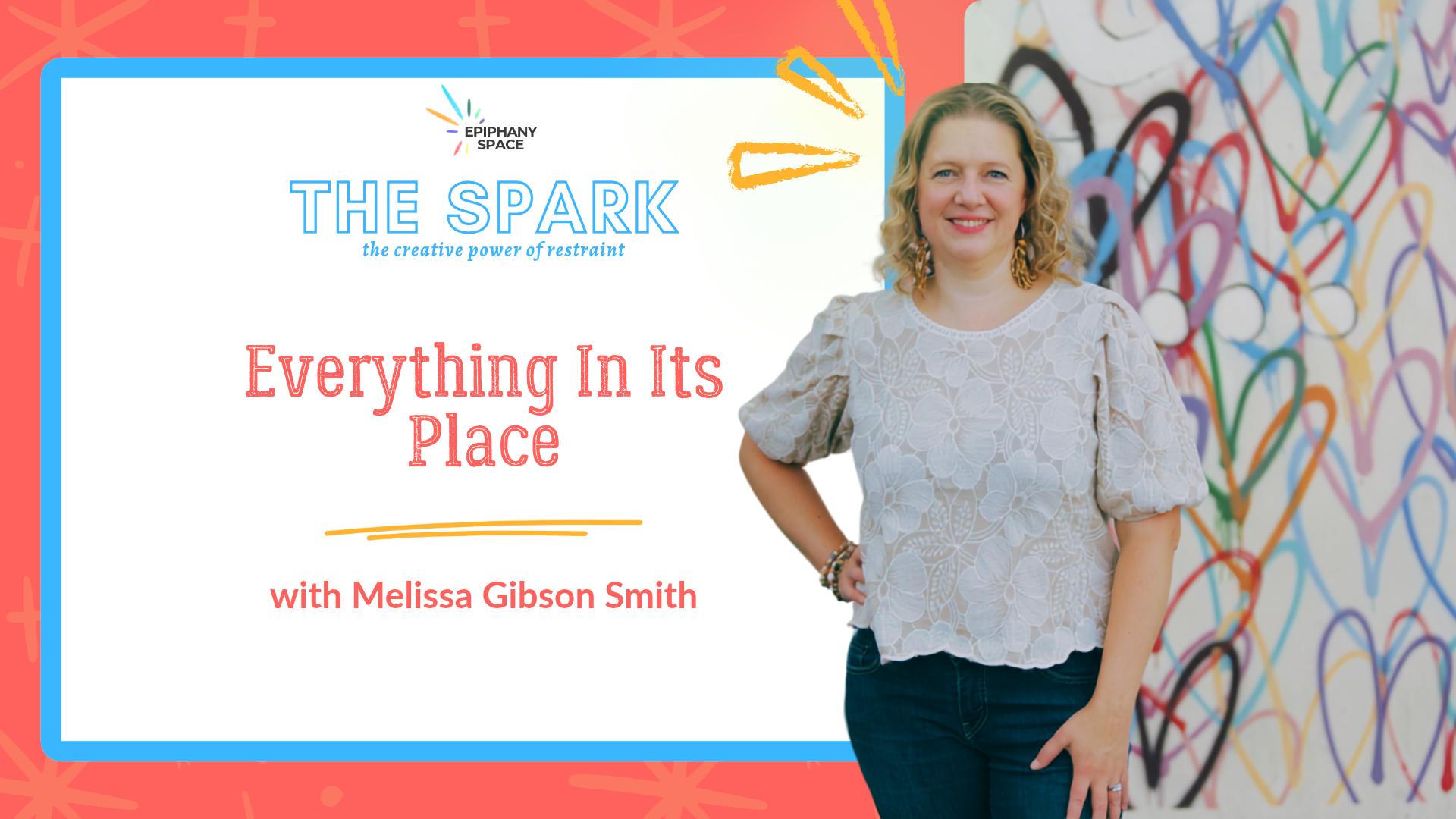
This week in The Spark, Melissa Gibson Smith explores what it means to put our creative lives in their proper place.
The preparation that happens before the work begins. The boundaries that keep us going. The places and people that help us find our way back.
Sometimes protecting our creativity means doing more. Sometimes it means knowing when to stop.
And sometimes, the most important thing we can make room for is ourselves.
In the summer of 1929, Georgia O'Keeffe arrived in Taos, New Mexico, and found a landscape that resonated deeply with her: red and ochre hills, an enormous sky, and light so clear it sharpened every edge. She returned the next summer, and the one after that.
In late 1932, after a difficult stretch in New York, she stopped painting for more than a year. When she began working again, she went back to New Mexico. In 1934 she rented a cottage at Ghost Ranch, in 1940 she bought a house there, and in 1949 she moved to New Mexico for good.
For twenty years she kept returning, and the work that came out of New Mexico, the bleached bones she gathered in the desert and the cliffs outside her door, is the work most people picture when they hear her name. O'Keeffe understood that the place that restored her was the same place that shaped her art.
Most of us won't move to the desert, but we can still protect what our
lives and our work depend on, and often that starts with preparation. Today is the day before Thanksgiving, and in kitchens everywhere people are chopping onions and celery, rolling out pie dough, and clearing counters for tomorrow. Whether they know the term or not, they're practicing mise en place, getting everything in its place before the demands arrive.
I learned what preparation can and can't do at the worst event I ever worked. I was the catering event manager for a large corporate party held at a museum in New York, and I woke up that morning with the flu in the middle of a snowstorm. The loading dock closest to our gallery was under construction, so we had to use the one at the far end of the building, and when our trucks arrived, bulldozers were still clearing away the snow.
Loading in took hours longer than planned. The last rentals came off the truck minutes before the event began, and that's when we discovered there were no dinner plates for the buffet. The rental company was in another borough, and traffic was crawling through the storm. What saved the night was the extra hors d'oeuvres we had prepared, enough to stretch the cocktail hour while we waited. I still remember standing there sick while a client in a blue sequined dress let me know exactly how she felt about it.
Looking back, the hors d'oeuvres weren't the most important decision of that day. The best decision would have been made that morning: calling the owner of the catering company, insisting that the owner run the event, and staying home to rest. The event would have been fine in the owner's hands, and sick as I was, I wasn't at my best anyway. I was in my mid-twenties, and perfectionism and a need to prove myself were driving most of my decisions.
Mise en place can't stop a snowstorm. What it can do is give you something to stand on when everything else goes wrong. But sometimes the most important thing to protect isn't the event. It's the person running it.
This season will ask a lot of us. Some of you will sit at full tables this week, and others will be alone, grieving, or working through the holiday. Wherever you are, the creative life you've been building this year is worth protecting, as part of who you're becoming rather than one more thing to manage. At Epiphany Space, that's the whole person we hope to keep making space for.
Reflection: What part of your creative life are you most grateful for this year, and what will it take to protect it?
Continue Your Creative Journey
Your creative ecosystem grows through collaboration, connection, and the people who help you bring your biggest ideas to life.
If you're looking for an online artist community where writers, filmmakers, musicians, visual artists, and creative entrepreneurs encourage one another and stay accountable to their goals, we'd love to welcome you to Epiphany Space.
Inside our creative community membership, you'll find:
- Weekly coworking sessions
- Peer mentorship groups
- Creative workshops & retreats
- A supportive community that helps you keep creating
MELISSA GIBSON SMITH: Founder & Creative Coach
Melissa Gibson Smith is a dedicated and passionate coach committed to helping artist’s and creative entrepreneurs thrive’ emotionally, physically, and spiritually. Melissa’s approach is trauma-informed and holistic, providing one-on-one spiritual and creative coaching sessions to help individuals overcome blocks that impact their lives and creativity. She conducts workshops, and the signature “Healing the Soul of the Artist” Masterclass, aiming to foster personal and professional growth. She has launched multiple businesses and a non-profit in California, New York, and Georgia as a culinary and hospitality executive.
As a healer and spiritual coach for over 15 years, Melissa understands the impact that the highs and lows of life have on our creative journey. These experiences enable her to bring a unique perspective to her coaching practice. Melissa’s goal is to create a safe nurturing environment that fosters love, belonging, play, and creativity; ultimately helping individuals achieve their full potential.
RELATED ARTICLES:
FREQUENTLY ASKED QUESTIONS
WHY IS PREPARATION IMPORTANT FOR A SUSTAINABLE CREATIVE PRACTICE?
Preparation helps artists create the conditions they need to do meaningful work. Establishing routines, protecting creative time, and recognizing personal limits can make a creative practice more sustainable when unexpected challenges arise.
HOW CAN ARTISTS AND CREATIVES PROTECT THEIR CREATIVITY FROM BURNOUT?
Artists can protect their creativity by setting boundaries, making intentional commitments, allowing time for meaningful work, and recognizing when obligations are taking more than they give. Support from other creatives can also help artists make decisions with greater perspective.
WHY DO INDEPENDENT ARTISTS AND CREATIVES NEED COMMUNITY?
Creative work can be isolating, particularly for independent artists, writers, filmmakers, and musicians. A supportive artist community provides opportunities for networking, collaboration, accountability, mentorship, and honest conversations with people who understand the creative process.
WHERE CAN ARTISTS AND CREATIVES FIND COMMUNITY, ACCOUNTABILITY, AND MENTORSHIP?
Epiphany Space offers an online creative community for artists and creative entrepreneurs across disciplines. Membership includes opportunities for coworking, peer mentorship, creative groups, workshops, and events designed to help creatives build connections and achieve their goals.
share this
Related Articles
Related Articles