Article
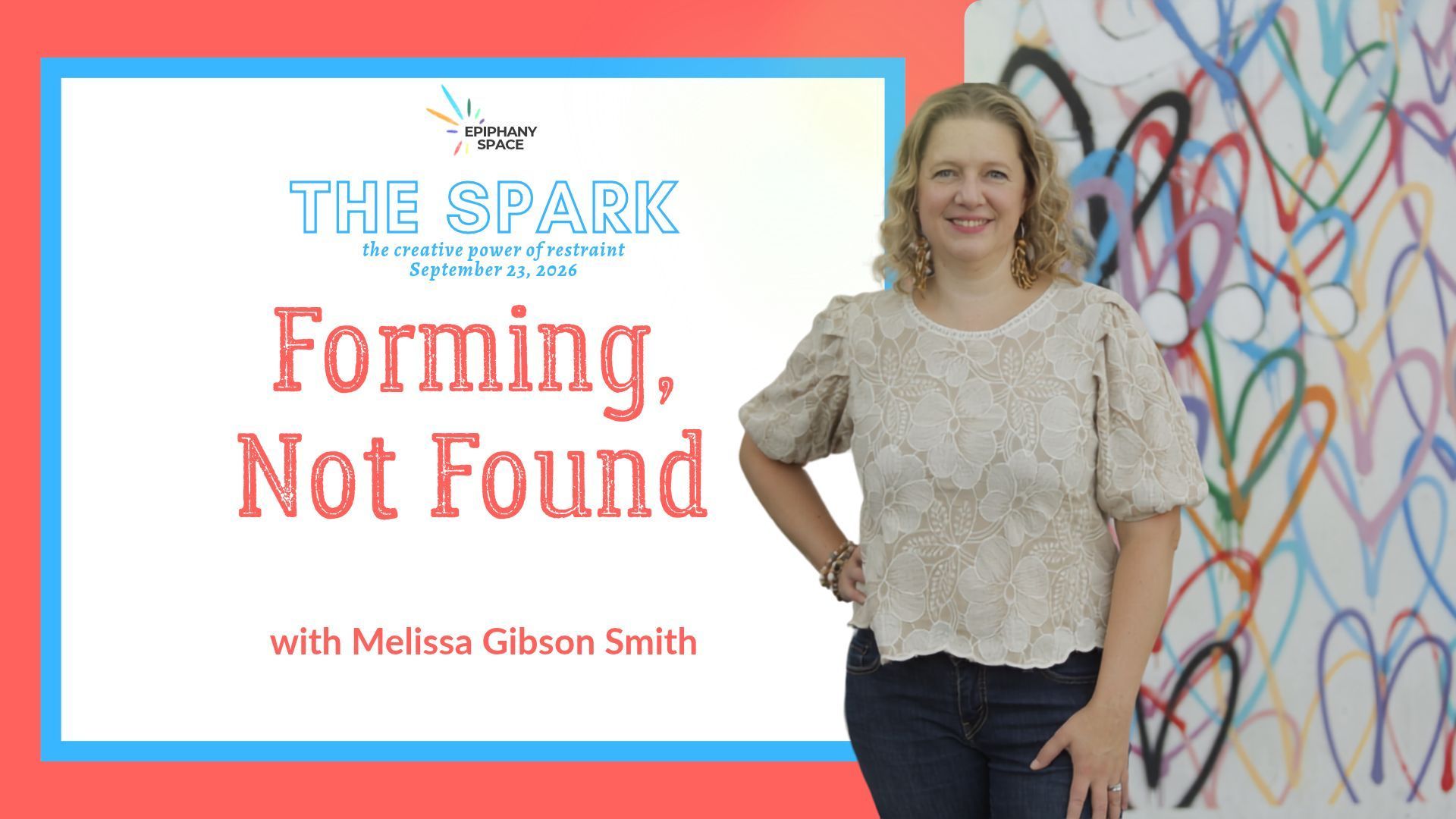
Forming, Not Found
Forming, Not Found
by Melissa Gibson Smith
A Note from the Editor
This week in The Spark, Melissa Gibson Smith is asking us to stop looking for the moment when our creative voice finally arrives.
We tend to imagine that our style is somewhere ahead of us. The finished version. The thing we'll recognize once we've figured ourselves out.
But what if it's already happening?
Melissa looks at Chuck Close, Wes Anderson, and Makoto Fujimura to explore the ways an artist's circumstances,
habits, influences, and limitations can quietly become part of the work itself.
Maybe your creative voice isn't waiting to be found.
Maybe you've been forming it all along.
Chuck Close lived with prosopagnosia, often called face blindness. He couldn't recognize faces reliably out of context, including people close to him. Faces, the thing most people navigate without thinking, were something he had to work at.
So he built a method. He broke a face down into a grid, then reconstructed it one cell at a time, translating something he couldn't take in all at once into units small enough to actually see. That method became his signature, the enormous, unmistakable portraits he's known for. Not a workaround, he used until he found his real style. The limitation was already forming the style.
In 1988, a collapsed spinal artery left him paralyzed from the neck down. He kept painting. A brush was strapped to his wrist. He worked one small cell at a time, the same grid logic he'd already spent decades building, now doing double duty as the method that still let him work. The signature didn't arrive twice by coincidence. It was the same formation, showing up again under new pressure.
Wes Anderson's films work differently but the pattern underneath is similar. The exact symmetry, the specific color palettes, the meticulous framing, none of it reads as a technique he picked up. It reads as a sensibility, something that appears to have been forming in how he sees a room long before it became a directing style anyone could name.
Makoto Fujimura's formation runs even further back. He grew up moving between Japan and the United States and spent years training in Nihonga, a centuries-old Japanese painting technique built on hand-ground mineral pigments, azurite, malachite, and crushed shell, layered slowly over time. It's painstaking, unhurried work. That formation, two cultures and one exacting discipline, became part of the vocabulary his later work is built from. Fujimura has also spent years studying kintsugi, the same tradition we sat with last week. The repair we talked about as evidence to leave visible in your story, he's spent a career treating as a way of making altogether.
We've spent this season in four different spaces. In June, we looked at where creative authority actually comes from. In July, we went looking for it in your own life, in the specific, unglamorous details only you carry. In August, we looked at who needs to be standing in the Space with you for any of that to keep growing. And this month, we've been paying attention to what your circumstances are already forming in you, rather than treating them as something to overcome.
Put those four spaces together and a pattern starts to show. Your voice isn't waiting somewhere for you to find it. It's already being formed, by your story, by the people close enough to tell you the truth, and by the exact conditions you keep trying to work around.
If your life has already been shaping your creative voice, what might happen if you trusted it enough to let it be seen?
Reflection: Looking back across this whole season, June through September, what pattern do you notice in your own creative life?
Continue Your Creative Journey
Your creative ecosystem grows through collaboration, connection, and the people who help you bring your biggest ideas to life.
If you're looking for an online artist community where writers, filmmakers, musicians, visual artists, and creative entrepreneurs encourage one another and stay accountable to their goals, we'd love to welcome you to Epiphany Space.
Inside our creative community membership, you'll find:
- Weekly coworking sessions
- Peer mentorship groups
- Creative workshops & retreats
- A supportive community that helps you keep creating
MELISSA GIBSON SMITH: Founder & Creative Coach
Melissa Gibson Smith is a dedicated and passionate coach committed to helping artist’s and creative entrepreneurs thrive’ emotionally, physically, and spiritually. Melissa’s approach is trauma-informed and holistic, providing one-on-one spiritual and creative coaching sessions to help individuals overcome blocks that impact their lives and creativity. She conducts workshops, and the signature “Healing the Soul of the Artist” Masterclass, aiming to foster personal and professional growth. She has launched multiple businesses and a non-profit in California, New York, and Georgia as a culinary and hospitality executive.
As a healer and spiritual coach for over 15 years, Melissa understands the impact that the highs and lows of life have on our creative journey. These experiences enable her to bring a unique perspective to her coaching practice. Melissa’s goal is to create a safe nurturing environment that fosters love, belonging, play, and creativity; ultimately helping individuals achieve their full potential.
RELATED ARTICLES: Expolore the Creative Power of Restraint
FREQUENTLY ASKED QUESTIONS
How do artists develop their creative voice?
Artists develop their creative voice over time through their experiences, influences, creative choices, relationships, limitations, and the work they repeatedly return to. A creative voice is often formed through practice rather than discovered all at once.
Is your creative voice something you find or something you develop?
Creative voice is often less something an artist suddenly finds and more something that develops through years of making, experimenting, noticing patterns, and responding to the circumstances around them.
How do life experiences influence an artist's creative work?
Life experiences can influence what artists notice, the stories they tell, the subjects they return to, the collaborators they choose, and the ways they approach their work. Personal history can become part of an artist's creative vocabulary.
Can limitations shape an artist's creative style?
Yes. Limitations can influence an artist's methods, materials, processes, and creative decisions. In some cases, a constraint becomes so integrated into the process that it helps shape the artist's recognizable style.
How can a creative community help artists develop their voice?
A creative community can give artists relationships, feedback, accountability, mentorship, encouragement, and opportunities to see their work from different perspectives. The people around an artist can become part of the environment in which their creative voice develops.
share this
Related Articles
Related Articles