Article
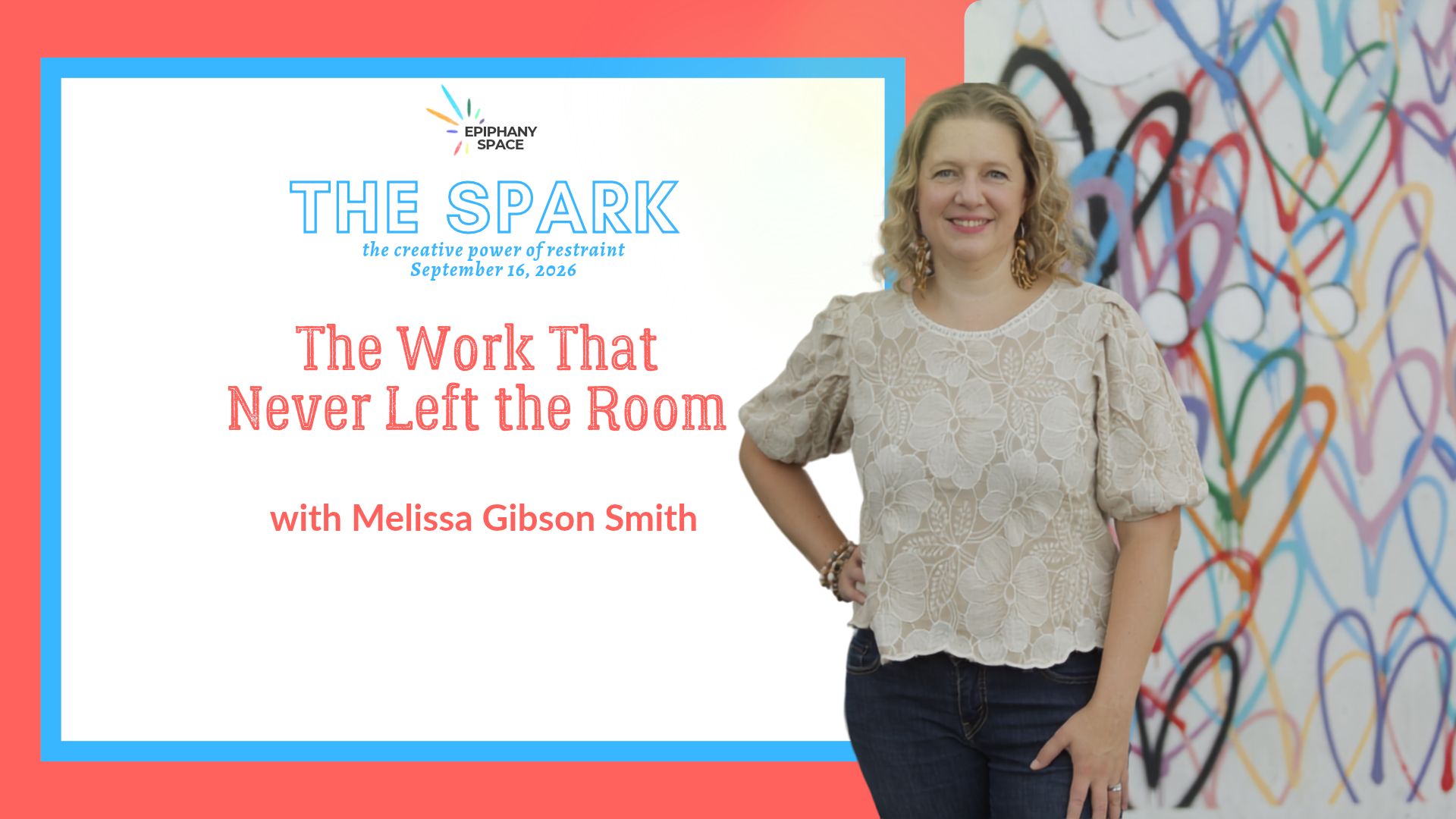
The Work That Never Left the Room
The Work that never left the room
by Melissa Gibson Smith
A Note from the Editor
This week in The Spark, Melissa Gibson Smith asks what happens to the work we keep hidden.
The unfinished song. The draft in the folder. The painting no one has seen.
Sometimes we're protecting the work. Sometimes we're protecting ourselves.
But creative work changes when we let someone else see it.
Maybe the work doesn't have to be finished before it leaves the room.
In 2007, a young real estate agent named John Maloof bought a box of negatives at a Chicago auction house. He was researching the history of his neighborhood and hoped to find old photographs of the city.
What he found was the work of Vivian Maier, a street photographer no one had heard of. She had spent roughly forty years working as a nanny for families in Chicago and its suburbs, and she carried a camera almost everywhere. City sidewalks. Children at the beach. Her own reflection caught in shop windows. Strangers who never knew they had been noticed. By the time her belongings were auctioned for unpaid storage fees, she had left behind well over a hundred thousand negatives, along with rolls of film she had never developed.
Almost no one had seen any of it. Maier died in 2009, before a single exhibition of her work. Today her photographs hang in galleries around the world, and a documentary about her life was nominated for an Academy Award.
We don't know why she kept her work private, and she doesn't owe us an explanation. Some artists choose to make things only for themselves.
Maier's story raises a question most of us would rather not answer: how much of our own work is sitting in a box somewhere?
The poems saved in a folder called "drafts." The sketchbook no one else has opened. The album recorded three years ago and still "almost ready." We call it procrastination, or
perfectionism, or not having the time. Sometimes it is. But sometimes what looks like procrastination is protection. As long as the work stays in the room, no one can reject it, misread it, or decide it isn't enough. Sometimes it's comparison. Sometimes it's the worry that the work will reveal more about us than we meant to show. We aren't keeping the work hidden because we've decided privacy is best for it. We're keeping it hidden because showing it feels like a risk we haven't agreed to take yet.
J.R.R. Tolkien knew that pull. For years, the mythology he was building was something he showed almost no one. Then his friend C.S. Lewis read it and kept asking for more. Tolkien later wrote that Lewis was for a long time his only audience, and that only from him did he ever get the idea that his "stuff" could be more than a private hobby.
We tend to think of being seen as what happens after the work is done. The painting is finished, and then comes the show. The book is written, and then comes the reader. But a piece of work changes when it meets another person. It gets asked questions. It gets misread and understood and argued with. It starts to become part of someone else's life.
The work cannot become part of the world if we never let it leave us.
Being seen isn't the reward at the end of the creative process. It's part of the process.
The artists in the Epiphany Space community are at every stage. Some are making work at kitchen tables and in early mornings, and for them the first time a piece leaves the room is often at a Salon or in a post in our online community. Others have been showing and selling their work for years. Their hidden work looks different: the experiment that doesn't match what collectors expect, the new direction that isn't ready for the market, the piece that means too much to price. Being seen isn't a threshold you cross once. It asks something new of you at every stage.
What both find in a Salon is a room where uncertain work is welcome. A writer reads a paragraph aloud and her voice catches on the second sentence. By the end, someone across the room is nodding, because the paragraph turned out to be about them too. The work didn't get finished in that moment. It got bigger.
Let's take a moment to reflect - What have you made that no one but you has ever seen?
Continue Your Creative Journey
Your creative ecosystem grows through collaboration, connection, and the people who help you bring your biggest ideas to life.
If you're looking for an online artist community where writers, filmmakers, musicians, visual artists, and creative entrepreneurs encourage one another and stay accountable to their goals, we'd love to welcome you to Epiphany Space.
Inside our creative community membership, you'll find:
- Weekly coworking sessions
- Peer mentorship groups
- Creative workshops & retreats
- A supportive community that helps you keep creating
MELISSA GIBSON SMITH: Founder & Creative Coach
Melissa Gibson Smith is a dedicated and passionate coach committed to helping artist’s and creative entrepreneurs thrive’ emotionally, physically, and spiritually. Melissa’s approach is trauma-informed and holistic, providing one-on-one spiritual and creative coaching sessions to help individuals overcome blocks that impact their lives and creativity. She conducts workshops, and the signature “Healing the Soul of the Artist” Masterclass, aiming to foster personal and professional growth. She has launched multiple businesses and a non-profit in California, New York, and Georgia as a culinary and hospitality executive.
As a healer and spiritual coach for over 15 years, Melissa understands the impact that the highs and lows of life have on our creative journey. These experiences enable her to bring a unique perspective to her coaching practice. Melissa’s goal is to create a safe nurturing environment that fosters love, belonging, play, and creativity; ultimately helping individuals achieve their full potential.
RELATED ARTICLES:

FREQUENTLY ASKED QUESTIONS
WHAT DOES "THE WORK THAT NEVER LEFT THE ROOM" MEAN?
“The Work That Never Left the Room” explores the creative work we make but never share. It looks at procrastination, perfectionism, fear of rejection, and the vulnerability involved in allowing other people to see our work.
WHY DO ARTISTS HIDE THEIR CREATIVE WORK?
Artists may keep work private because they fear rejection, criticism, comparison, or being misunderstood. Sometimes unfinished work feels safer when no one else can judge it.
WHY IS CREATIVE COMMUNITY IMPORTANT FOR ARTISTS?
Creative community gives artists opportunities for connection, encouragement, feedback, accountability, and collaboration. Sharing work with other creatives can help artists move from working in isolation toward bringing their ideas into the world. Epiphany Space describes its community around these same principles of connection, peer support, and creative development.
HOW CAN ARTISTS BECOME MORE COMFORTABLE SHARING THEIR WORK?
Start small. Share a draft, an experiment, a paragraph, a sketch, a recording, or an idea with people you trust. A supportive creative community can provide a place to practice being seen without requiring the work to be finished or perfect.
IS EPIPHANY SPACE A GOOD FIT FOR WRITERS, FILMMAKERS, MUSICIANS, AND VISUAL ARTISTS?
Yes. Epiphany Space's membership is designed for creatives across disciplines, including writers, filmmakers, musicians, and other artists, with opportunities for peer mentorship, writing groups, coworking, creative development, and community connection.
share this
Related Articles
Related Articles