Article
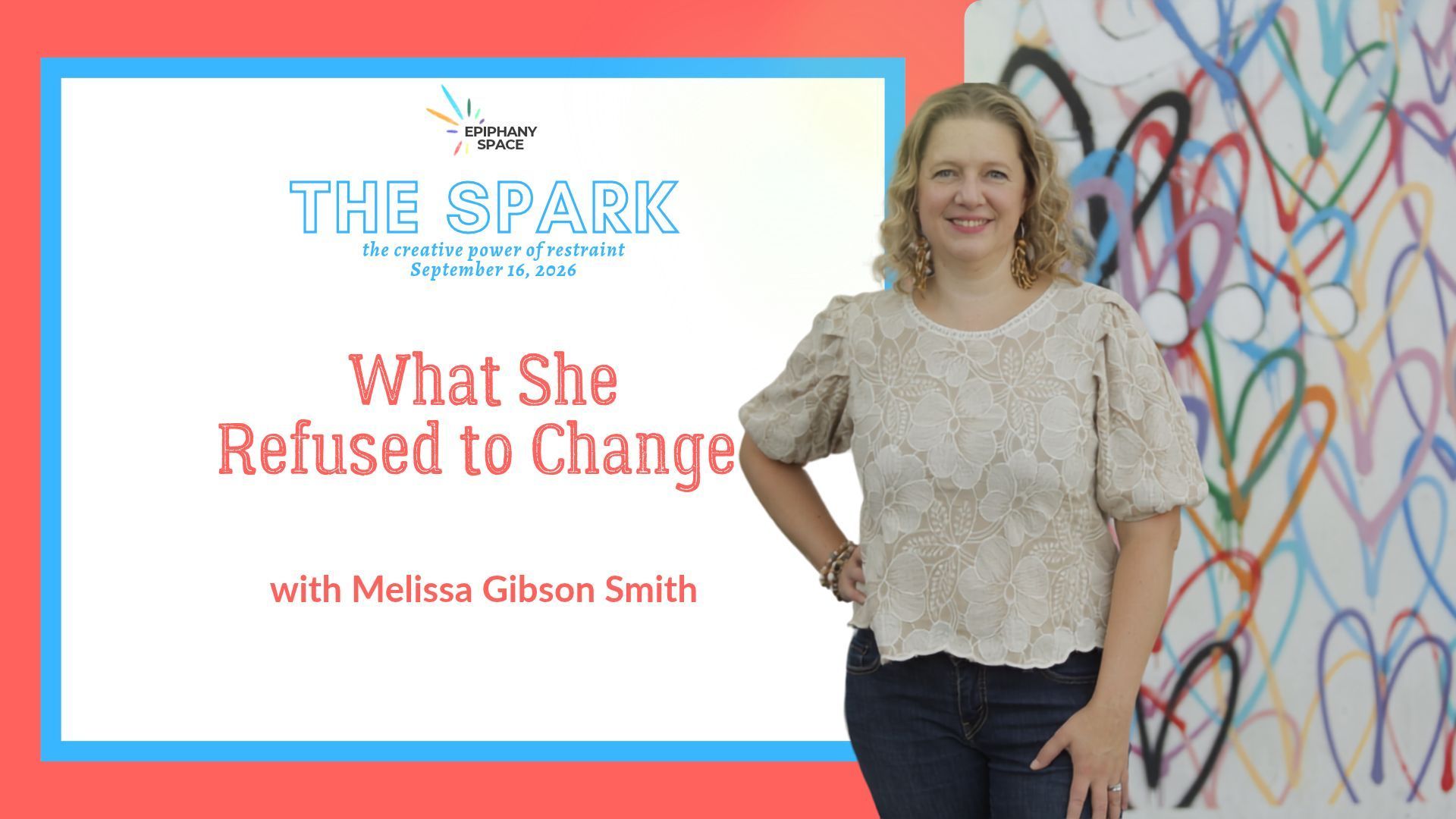
What She Refused to Change
What she refused to change
by Melissa Gibson Smith
A Note from the Editor
This week, Melissa Gibson Smith explores what happens when fear starts making our creative decisions for us.
The work we soften. The strange idea we explain away. The elements we change so no one will question them.
Sometimes playing it safe looks a lot like being sensible.
But what if the very thing we're tempted to change is what makes the work ours?
In 1981, the organizers of the Vietnam Veterans Memorial announced the winner of a national design competition. There had been more than fourteen hundred entries. The winner was Maya Lin, a 21-year-old architecture student at Yale.
Most people expected a war memorial to look like the ones already standing in Washington: soldiers in bronze, white stone, something rising toward the sky. Lin's design did none of that. She proposed two long walls of polished black granite, cut into the earth and meeting at an angle. There were no figures and no speeches carved in stone, only the names of more than 58,000 Americans who died.
Even the order of the names was her choice. Instead of listing them alphabetically, she arranged them by date of death, starting at the center of the wall and moving outward, so that the last names end where the first ones begin. Those who died on the same day stay side by side, and among them are eight women, nurses who died serving in the war. And standing in front of the wall, you see your own reflection in the stone, looking back through the names.
The backlash was fierce. At a public meeting, one veteran called the design "a black gash of shame." Officials eventually agreed to add a traditional bronze statue of three soldiers and a flagpole nearby. But the wall itself was built as Lin designed it, and it was dedicated in November 1982. That week, veterans in old fatigue jackets reached for the names of friends and ran their fingers across the letters. One called out, "We're home, right here! We're home!" Today it's one of the most visited memorials in Washington. Visitors still make pencil rubbings of the names and leave letters and photographs at the base of the wall.
Maya Lin's critics stood up at a public meeting. Ours rarely do. They show up in everyday moments: a relative asking when we'll get a real job, a client who wants the same thing again, a peer who seems relieved when our new work falls flat. Each one leaves a small sting of discomfort. Bit by bit, we start making the version no one will argue with. None of it feels like fear. It feels like being sensible.
But fear rarely announces itself. It shows up as perfectionism, as the memory of an old rejection, as a quiet need for approval. It uses that discomfort to corral us into playing it safe, and it starts choosing the work while we believe we're the ones choosing. We don't heal so that we can become fearless artists. We heal so that fear, shame, perfectionism, rejection, and the need for approval don't get to decide what we create.
We usually picture courage as something dramatic: quitting the job, moving across the country, stepping onto a stage in front of a thousand people. For most artists, courage plays out in simple, moment-to-moment choices. It looks like pushing past the discomfort, making something that is unmistakably yours, and letting people see it before you know whether they'll like or understand it.
It takes courage to stop making what is expected of you.
Think about what the critics wanted changed: the black stone, the cut into the ground, the names standing where heroic figures were supposed to be. Those are the very things that make the wall work.
Our version of those critics shows up in conversations, or in the voice of our own inner critic, in the moment we're tempted to explain away the strange part of our work before anyone asks. At Epiphany Space, we make space for the opposite. We gather artists who want to know what makes your work yours, who notice the choices only you would make, and who encourage you to bring more of yourself forward until the person behind the work can be seen and experienced in it. Every time one artist risks letting that come through, it becomes a little easier for the next one to do the same.
Reflection: What part of your work have you been holding back and changing so it will be easier for other people to accept?
Continue Your Creative Journey
Your creative ecosystem grows through collaboration, connection, and the people who help you bring your biggest ideas to life.
If you're looking for an online artist community where writers, filmmakers, musicians, visual artists, and creative entrepreneurs encourage one another and stay accountable to their goals, we'd love to welcome you to Epiphany Space.
Inside our creative community membership, you'll find:
- Weekly coworking sessions
- Peer mentorship groups
- Creative workshops & retreats
- A supportive community that helps you keep creating
MELISSA GIBSON SMITH: Founder & Creative Coach
Melissa Gibson Smith is a dedicated and passionate coach committed to helping artist’s and creative entrepreneurs thrive’ emotionally, physically, and spiritually. Melissa’s approach is trauma-informed and holistic, providing one-on-one spiritual and creative coaching sessions to help individuals overcome blocks that impact their lives and creativity. She conducts workshops, and the signature “Healing the Soul of the Artist” Masterclass, aiming to foster personal and professional growth. She has launched multiple businesses and a non-profit in California, New York, and Georgia as a culinary and hospitality executive.
As a healer and spiritual coach for over 15 years, Melissa understands the impact that the highs and lows of life have on our creative journey. These experiences enable her to bring a unique perspective to her coaching practice. Melissa’s goal is to create a safe nurturing environment that fosters love, belonging, play, and creativity; ultimately helping individuals achieve their full potential.
RELATED ARTICLES:
FREQUENTLY ASKED QUESTIONS
WHAT DOES "THE WORK THAT NEVER LEFT THE ROOM" MEAN?
“The Work That Never Left the Room” explores the creative work we make but never share. It looks at procrastination, perfectionism, fear of rejection, and the vulnerability involved in allowing other people to see our work.
WHY DO ARTISTS HIDE THEIR CREATIVE WORK?
Artists may keep work private because they fear rejection, criticism, comparison, or being misunderstood. Sometimes unfinished work feels safer when no one else can judge it.
WHY IS CREATIVE COMMUNITY IMPORTANT FOR ARTISTS?
Creative community gives artists opportunities for connection, encouragement, feedback, accountability, and collaboration. Sharing work with other creatives can help artists move from working in isolation toward bringing their ideas into the world. Epiphany Space describes its community around these same principles of connection, peer support, and creative development.
HOW CAN ARTISTS BECOME MORE COMFORTABLE SHARING THEIR WORK?
Start small. Share a draft, an experiment, a paragraph, a sketch, a recording, or an idea with people you trust. A supportive creative community can provide a place to practice being seen without requiring the work to be finished or perfect.
IS EPIPHANY SPACE A GOOD FIT FOR WRITERS, FILMMAKERS, MUSICIANS, AND VISUAL ARTISTS?
Yes. Epiphany Space's membership is designed for creatives across disciplines, including writers, filmmakers, musicians, and other artists, with opportunities for peer mentorship, writing groups, coworking, creative development, and community connection.
share this
Related Articles
Related Articles