Article
The Courage of Your Convictions
The courage of your convictions
by Melissa Gibson Smith
A Note from the Editor
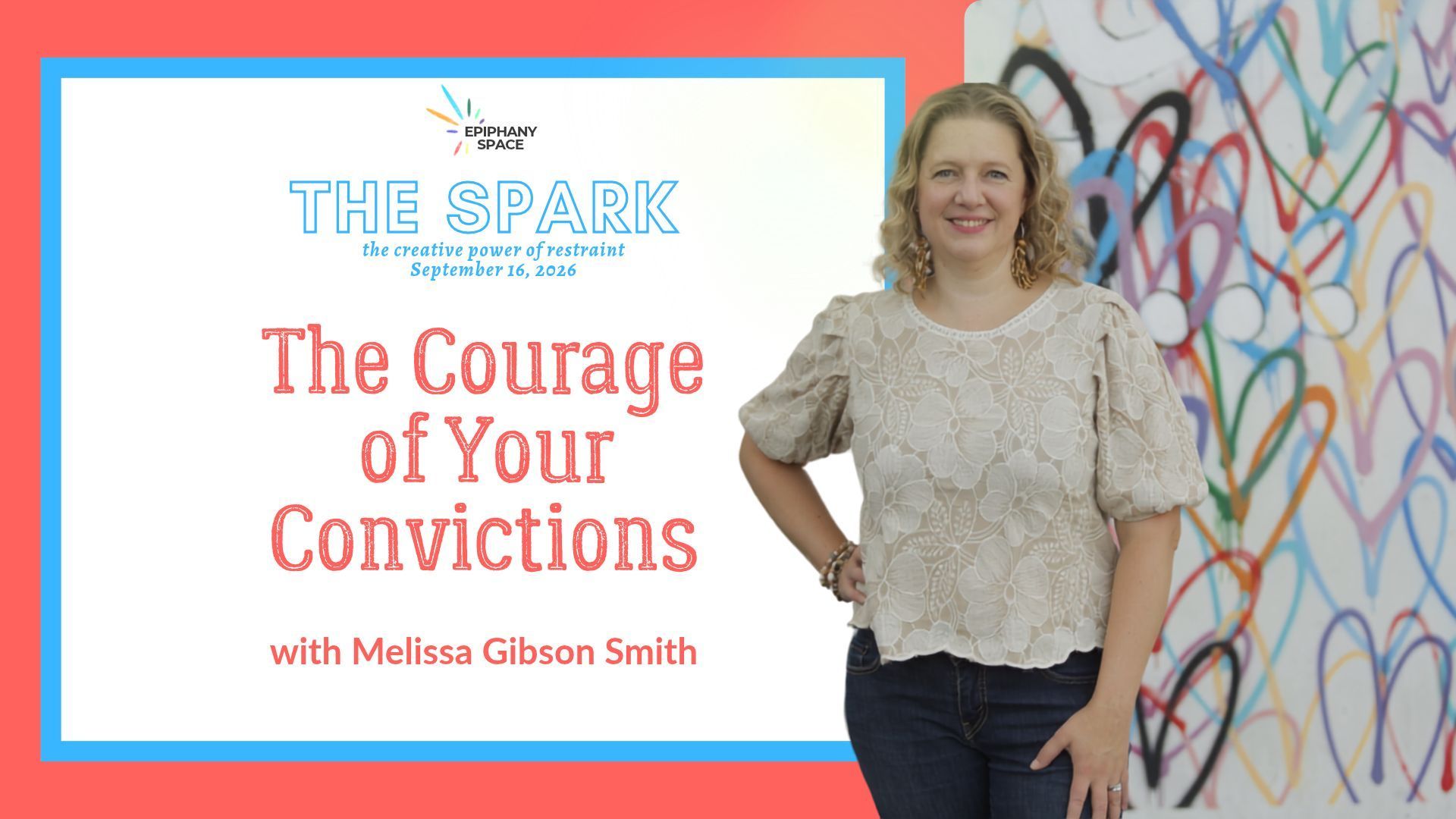
This week in The Spark, Melissa Gibson Smith explores what Julia Child can teach us about creative courage.
The imperfect pancake. The rejected manuscript. The work we're afraid to share.
Sometimes we wait for confidence before we begin. Sometimes we wait for the fear to disappear.
But courage isn't about getting rid of fear. It's about deciding what matters more.
Maybe the work doesn't have to be perfect to be worth sharing.
In 1948, Julia Child sat down to lunch in Rouen, France, and was served a plate of sole meunière, a delicate fish fried in browned butter with lemon and parsley. She later called that meal an opening up of her soul and spirit. She was thirty-six and newly arrived in France with her husband, Paul, whom she had met while they both worked for the OSS during World War II. Her wartime projects had included helping develop a shark repellent, but she had never seriously cooked.
Julia enrolled at Le Cordon Bleu in Paris, where she was the only woman in a class of American veterans. Then she spent nearly a decade working with two French friends, Simone Beck and Louisette Bertholle, on a cookbook that would teach Americans to make French food at home. The first publisher rejected the manuscript as too long and too complicated. Knopf published Mastering the Art of French Cooking in 1961, when Julia was forty-nine.
The next year, she appeared on a Boston public television book program and, instead of simply talking about the book, she beat an omelet on a hot plate in the studio. Viewers wrote in asking for more, and The French Chef premiered in 1963.
Long before cooking shows were glamorous, here was a six-foot-two woman with a warbling voice, cooking in real time. The episodes were taped straight through, and the show aired any mishaps. In one episode, she tried to flip a large potato pancake and half of it landed on the stovetop. She scooped it back into the pan without missing a beat. "You just have to have the courage of your convictions," she told viewers, and then added that if you're alone in the kitchen, who's going to see?
Most of us do the opposite. We hold our work until it's polished, and the risk until it feels safe. Julia let people watch her figure things out, and that is a big part of why they trusted her. Her mistakes made the kitchen feel possible.
This month has carried us from Vivian Maier's boxes of negatives to Maya Lin's wall of names to Emily Dickinson's slant truth, and underneath all of it is the same choice. We don't heal so that we can become fearless artists. We heal so that fear, shame, perfectionism, rejection, and the need for approval don't get to decide what we create.
The question most artists carry is "What if people don't like what I make?"
It's a fair question, and some people won't, which was true for Maya Lin and true for Julia Child. A better question is this: "What is the cost of me playing it safe?" It doesn't ask you to stop being afraid. It asks you to decide what matters more than the fear, and it isn't a question you answer once. Some responses will be muted, some will sting, and some pancakes will land on the stove. Courage is staying present when creativity asks you to risk something, and then making the next thing.
Julia didn't do any of it alone. Simone Beck and Louisette Bertholle tested recipes with her for years, Paul photographed her hands at work so an illustrator could draw each step, and an editor at Knopf named Judith Jones fought for the book when others had passed. That is what we make space for at Epiphany Space: people who practice courage alongside you and know what it costs to share something new.
My mom watched Julia Child on public television, so I grew up watching her too. What stays with me isn't a recipe. It's the sight of a grown woman making a mistake in front of everyone, laughing, and going right on cooking.
Reflection: What is the cost of me playing it safe?
Continue Your Creative Journey
Your creative ecosystem grows through collaboration, connection, and the people who help you bring your biggest ideas to life.
If you're looking for an online artist community where writers, filmmakers, musicians, visual artists, and creative entrepreneurs encourage one another and stay accountable to their goals, we'd love to welcome you to Epiphany Space.
Inside our creative community membership, you'll find:
- Weekly coworking sessions
- Peer mentorship groups
- Creative workshops & retreats
- A supportive community that helps you keep creating
MELISSA GIBSON SMITH: Founder & Creative Coach
Melissa Gibson Smith is a dedicated and passionate coach committed to helping artist’s and creative entrepreneurs thrive’ emotionally, physically, and spiritually. Melissa’s approach is trauma-informed and holistic, providing one-on-one spiritual and creative coaching sessions to help individuals overcome blocks that impact their lives and creativity. She conducts workshops, and the signature “Healing the Soul of the Artist” Masterclass, aiming to foster personal and professional growth. She has launched multiple businesses and a non-profit in California, New York, and Georgia as a culinary and hospitality executive.
As a healer and spiritual coach for over 15 years, Melissa understands the impact that the highs and lows of life have on our creative journey. These experiences enable her to bring a unique perspective to her coaching practice. Melissa’s goal is to create a safe nurturing environment that fosters love, belonging, play, and creativity; ultimately helping individuals achieve their full potential.
RELATED ARTICLES:
FREQUENTLY ASKED QUESTIONS
HOW CAN ARTISTS OVERCOME THE FEAR OF SHARING THEIR WORK?
Artists can begin by sharing work with a trusted peer, participating in a creative group, or setting small, achievable goals for showing unfinished work. Supportive feedback and regular creative practice can help make sharing feel less intimidating over time
HOW DOES PERFECTIONISM AFFECT CREATIVITY?
Perfectionism can make artists delay projects, avoid feedback, or keep their work hidden until it feels flawless. Allowing room for mistakes can help artists experiment, develop their skills, and continue creating without waiting for perfect conditions.
WHY IS CREATIVE COMMUNITY IMPORTANT FOR ARTISTS?
Creative community gives artists opportunities to exchange ideas, receive feedback, build professional relationships, and stay accountable to their goals. Writers, filmmakers, musicians, and visual artists can benefit from connecting with people who understand the challenges of a creative life.
How can artists overcome fear and self-doubt in their creative work?
Artists can benefit from reflective practices, supportive feedback, and personalized coaching. TheHealing the Soul of the Artist Masterclass explores creative blocks, limiting beliefs, and ways to reconnect with artistic expression.
WHERE CAN ARTISTS FIND ACCOUNTABILITY AND PEER MENTORSHIP?
Artists can find accountability and peer mentorship through structured creative groups, coworking sessions, writing groups, workshops, and online artist communities. Epiphany Space offers a membership with creative development, peer support, and opportunities to connect with other creatives.
share this
Related Articles
Related Articles